Hallway Lighting Ideas: Making Corridors and Stairs Feel Welcoming
Hallways are often the darkest part of a home. Wall lights to make them feel wider, statement pendants in entries, gentle night lighting and safe, well-lit stairs.
Hallways and entries set the first impression of a home, yet they are often lit by a single ceiling fitting. A few well-placed lights make corridors feel wider and more welcoming, and make stairs safer.
Ideas by space
| Space | Idea |
|---|---|
| Narrow corridor | Wall lights throwing light up and down make it feel wider and taller |
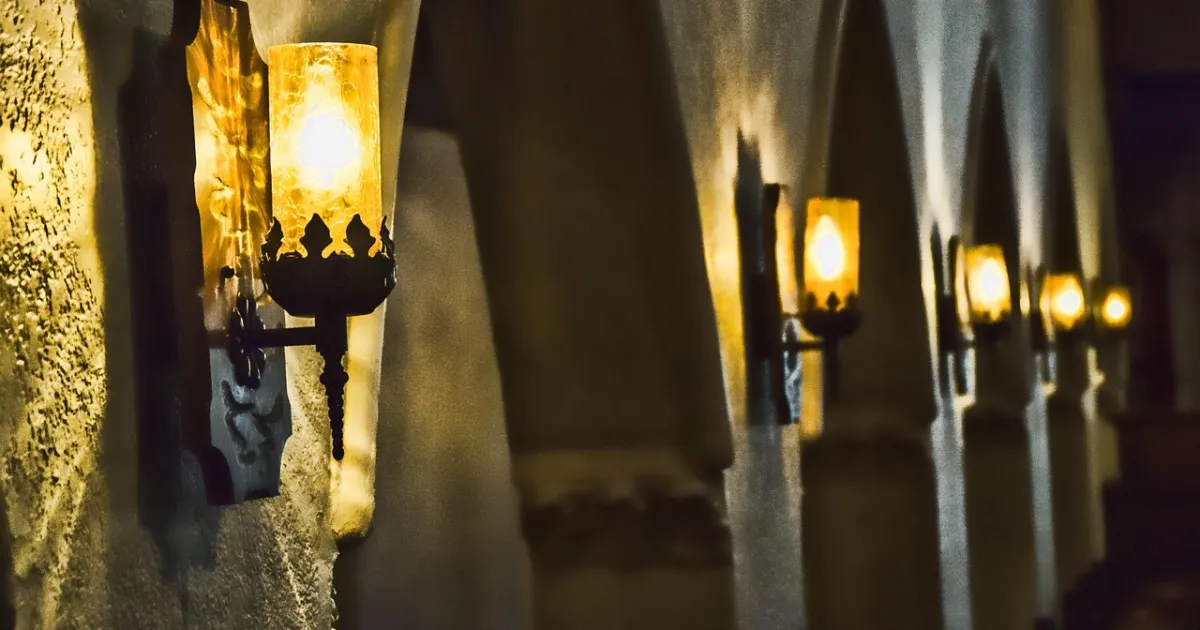
| Long corridor | A row of evenly spaced flush ceiling lights or wall lights; light the end wall to draw the eye |
| Entry with high ceiling | A statement pendant or cluster; see modern pendant lights |
| Gallery wall | Picture lights or wall washers on artwork |
| Stairs | Step lights, wall lights at landing height, or LED strip under the handrail |
Low and night lighting
- Low-level step lights or recessed wall lights guide the way at night without waking anyone.
- Motion sensors on a dim setting for night-time trips.
- Warm, low-brightness light avoids dazzling sleepy eyes.
Practical tips
- Space wall lights evenly, typically every couple of metres in a long corridor.
- Choose slim fittings in narrow hallways so they do not catch shoulders.
- Two-way switching at both ends of the hallway and stairs.
- Warm white (2700–3000 K) for a welcoming feel.
For wall fitting ideas see wall lighting ideas; for the whole house, home lighting design.
In Australia, installing or replacing hard-wired lighting must be done by a licensed electrician.
Questions
How do you light a narrow hallway?
With slim wall lights that throw light up and down, which makes the space feel wider, and by lighting the end wall.
How far apart should hallway lights be?
Typically every couple of metres, evenly spaced, depending on the fittings and ceiling height.
What is the best night light for a hallway?
Low-level step lights or a dim motion-sensor light in warm white.