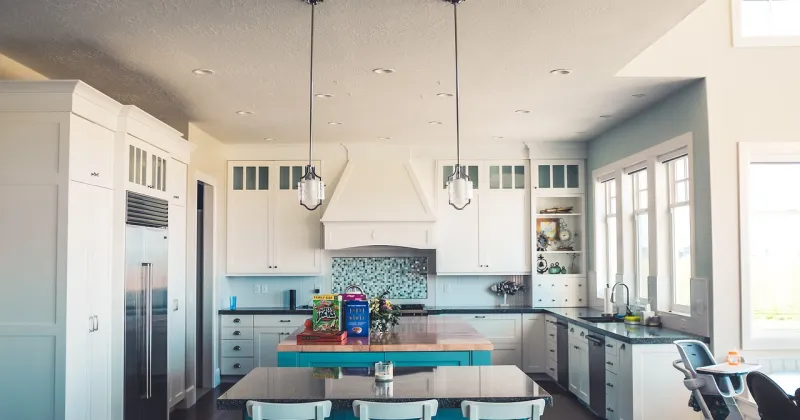
Kitchen Lighting Ideas: How to Layer Light in Your Kitchen
Good kitchen lighting is layered: general light, task light on the benches and a little accent. Here is how to plan each layer, plus ideas for small, galley and open-plan kitchens.
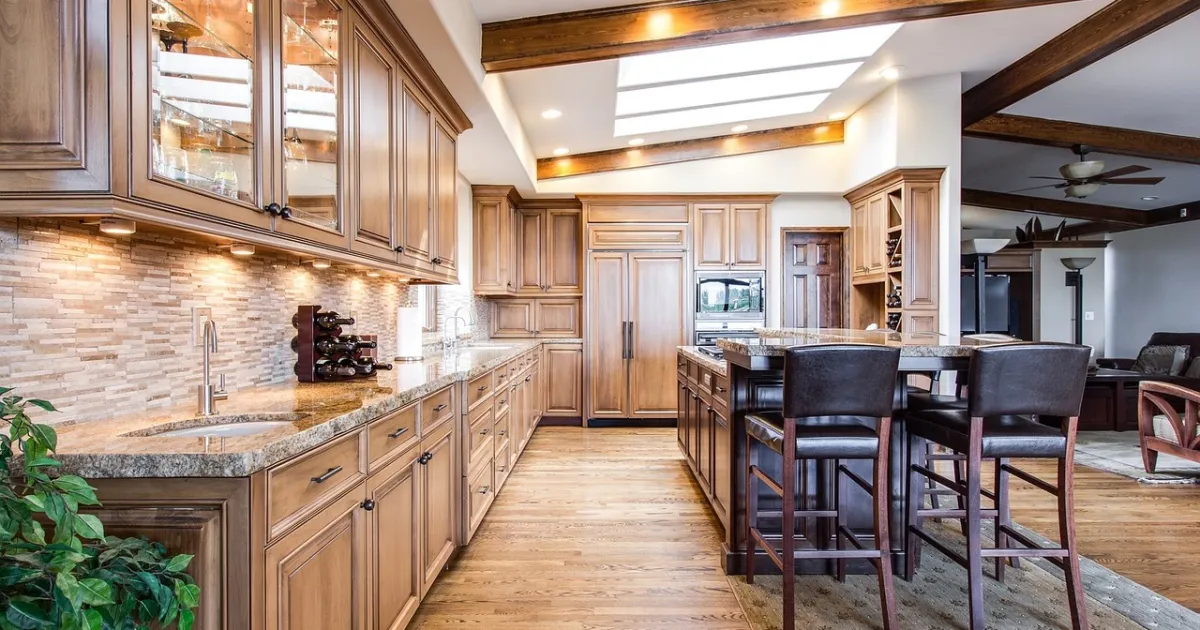
A kitchen lit by one ceiling light always disappoints: you stand between the light and the bench and work in your own shadow. The fix is to think in layers, each with a job and, ideally, its own switch.
The three layers
| Layer | Job | Typical fittings |
|---|---|---|
| Ambient | Even general light to move around safely | Downlights, ceiling lights, track |
| Task | Bright light where you prepare food | Under-cabinet LED strip, island pendants, rangehood light |
| Accent | Mood and depth | Lights in glass cabinets, toe-kick strips, shelf lighting |
Ambient: downlights done well
- Place downlights over the front edge of the benches, not in the middle of the room, so light falls ahead of you rather than behind.
- Space them evenly, roughly 1 to 1.5 m apart depending on beam angle and ceiling height.
- Choose fittings with a wide beam for general light and keep the colour consistent across the room.
Task: the layer that matters most
- Under-cabinet LED strip lights benches directly with no shadows. Mount it towards the front of the cabinet underside, ideally in an aluminium channel with a diffuser.
- Island pendants light the island bench; see kitchen island lighting for numbers and spacing.
- Rangehood lights cover the cooktop.
Accent: the finishing touch
- LED strip under the toe-kick makes cabinets float and works as a night light.
- Lights in glass-front cabinets or open shelves add depth.
- A wall light or small lamp on a bench softens an open-plan kitchen at night.
Colour temperature
Warm white (2700–3000 K) is the most popular choice in open-plan living. Neutral white (about 4000 K) feels crisper and shows food colours well. Pick one and use it for every layer, so the light does not look patchy. A colour rendering index (CRI) of 90 or more makes food and finishes look natural. More in LED light bulbs.
Switching
Put each layer on its own switch and dim at least the pendants and ambient lights. In an open-plan room, being able to turn off the bright task light while keeping a soft glow is what makes the kitchen comfortable after dinner.
Ideas by kitchen type
- Small or galley: a strip under every wall cabinet and a single row of downlights; skip bulky pendants.
- Open-plan with island: pendants as the feature, strip light under cabinets, downlights on a dimmer.
- Modern and minimal: recessed linear profiles and a slim linear pendant.
- Heritage or farmhouse: enamel or brass pendants, wall sconces over open shelves.
- Rental: plug-in or battery LED strips under cabinets need no electrician.
In Australia, any fixed wiring, including installing a new pendant or downlight, must be done by a licensed electrician.
Questions
What is the best lighting for a kitchen?
A layered scheme: downlights or ceiling lights for general light, under-cabinet strips and island pendants for task light, and accent lighting for mood.
What colour temperature is best for a kitchen?
Warm white (2700–3000 K) for open-plan living, or neutral white (about 4000 K) for a crisper working kitchen. Keep it consistent.
Where should downlights go in a kitchen?
Over the front edge of the benches, so the light falls in front of you instead of casting your shadow on the work surface.