Rattan Pendant Lights: Style, Sizing and Care
Rattan pendants bring warmth, texture and patterned shadows to a room. What rattan actually is, how the weave changes the light, which rooms suit it, and how to keep a natural shade looking good.
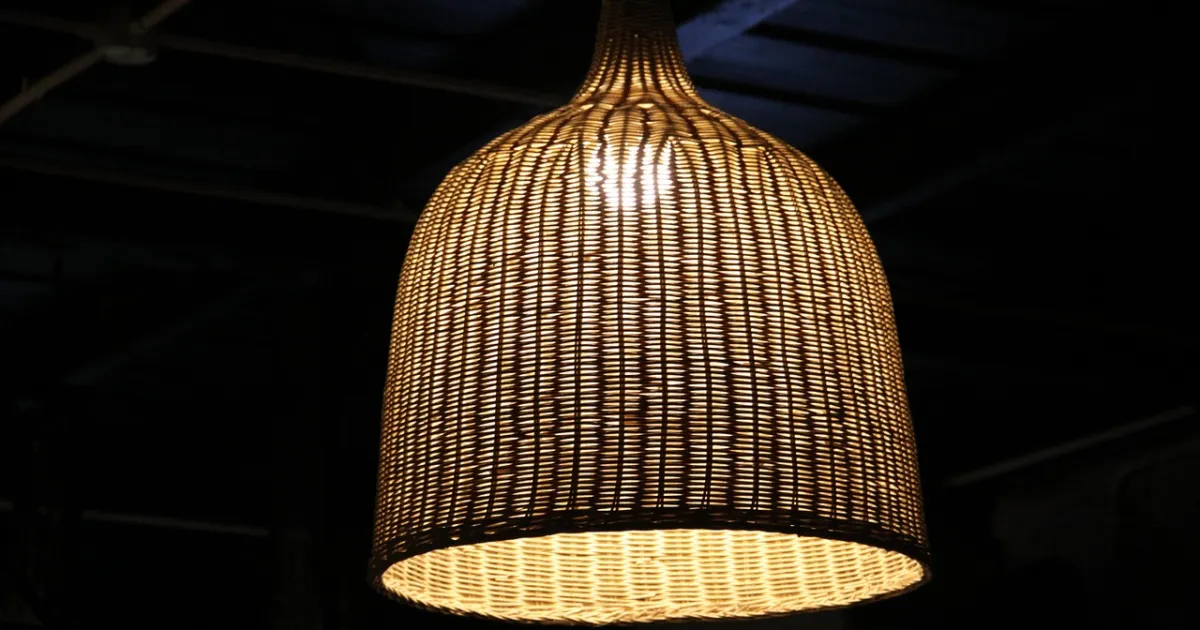
Rattan pendants are a staple of coastal, Scandinavian and relaxed modern interiors. Their open weave softens a room and throws patterned shadows across walls and ceilings when the light is on. Here is how to choose one that suits your space and keep it looking good.
Rattan, wicker, cane or bamboo?
| Term | What it is |
|---|---|
| Rattan | A climbing palm with solid, flexible stems |
| Cane | The thin outer skin peeled from rattan, often woven in fine patterns |
| Wicker | A weaving technique, not a material; can use rattan, willow or synthetic fibre |
| Bamboo | A grass with hollow stems; stiffer than rattan |
| Synthetic rattan | Plastic resin woven to look like rattan; suits covered outdoor areas |
How the weave shapes the light
- Open weave: strong patterned shadows, dramatic at night; less direct light on surfaces below.
- Tight weave: softer, more even glow; good for living rooms and bedrooms.
- Lined shade: a fabric or paper lining inside gives warm, glare-free light and hides the globe.
- Open bottom: a dome or bell with an open base adds useful light downward over a table.
Shapes and sizes
- Dome and bell: over dining tables and benches.
- Globe and lantern: all-round glow for living rooms, entries and bedrooms.
- Oversized drum or disc: a statement in a high-ceilinged room.
- Small clusters: three pendants hung at staggered drops over a void or corner.
For sizing rules and hanging heights, see our pendant lights guide and how high to hang a pendant light.
Where rattan works best
- Living and dining rooms, especially with timber, linen and plants.
- Bedrooms, where the soft light and texture feel calm.
- Covered verandas and alfresco areas, using synthetic rattan or fittings rated for outdoor use.
- Less suited to bathrooms and over cooktops: steam, grease and heat are hard on natural fibre.
Globes
Use LED globes: they run cool, which matters with natural fibre. Warm white (2700–3000 K) brings out the honey tones of rattan. A clear filament globe emphasises the shadow pattern; a frosted globe softens it. Check the fitting's base type in LED light bulbs.
Care
- Dust regularly with a soft brush or the brush attachment of a vacuum.
- Wipe with a barely damp cloth if needed and let it dry fully; never soak rattan.
- Keep out of constant direct sun, which can fade and dry the fibre.
- A very dry room can make rattan brittle; a light mist of water now and then helps some natural shades.
In Australia, installing or replacing a hard-wired light fitting must be done by a licensed electrician.
Questions
Do rattan pendant lights give good light?
They give a soft, patterned light. Open weaves create shadows rather than strong task light, so pair them with other sources or choose a lined or open-bottom shade.
Can rattan pendants be used outside?
Natural rattan suits only fully covered, dry areas. For verandas and alfresco spaces, choose synthetic rattan or fittings rated for outdoor use.
What globe should I use in a rattan pendant?
A warm white LED globe, which runs cool and flatters the natural fibre.