Light Bulb Types: Bases, Shapes and Technologies Explained
Bayonet or screw, GU10 or MR16, A60 or candle: how to identify any light bulb by its base and shape, which technology to choose, and how to buy the right replacement first time.
Buying a replacement globe should be simple, but the shelf holds dozens of bases, shapes and technologies. Three questions sort it out: which base does the fitting take, what shape fits the shade, and how bright and warm should the light be?
Technologies
| Type | Efficiency | Notes |
|---|---|---|
| LED | Highest | Long life, cool running, the standard choice today |
| Halogen | Low | Bright, warm, very hot; largely replaced by LED |
| Compact fluorescent (CFL) | Medium | Slow to warm up; contains mercury, so recycle properly |
| Incandescent | Lowest | Phased out for general lighting in Australia from 2009 onwards |
Common bases
| Base | What it looks like | Typical use |
|---|---|---|
| B22 (BC) | Bayonet, two pins on the side, 22 mm | Many Australian ceiling fittings and lamps |
| E27 (ES) | Edison screw, 27 mm | Pendants, lamps, imported fittings |
| E14 (SES) | Small Edison screw, 14 mm | Chandeliers, candle globes, small lamps |
| B15 (SBC) | Small bayonet | Small lamps and some fittings |
| GU10 | Two thick pins with a twist-lock | Mains-voltage spotlights and some downlights |
| MR16 (GU5.3) | Two thin pins, push-in | Low-voltage spotlights with a transformer |
| G9 | Two looped pins | Small wall lights and chandeliers |
More detail: E27 vs B22 and G9 LED bulbs.
GU10 LED globes
GU10 globes run directly on mains power and twist into place. When replacing halogen GU10s with LED, compare lumens, choose the beam angle (narrow for accent, wide for general light), check that dimmable LEDs suit your dimmer, and make sure the LED fits the recessed housing.
E14 LED globes
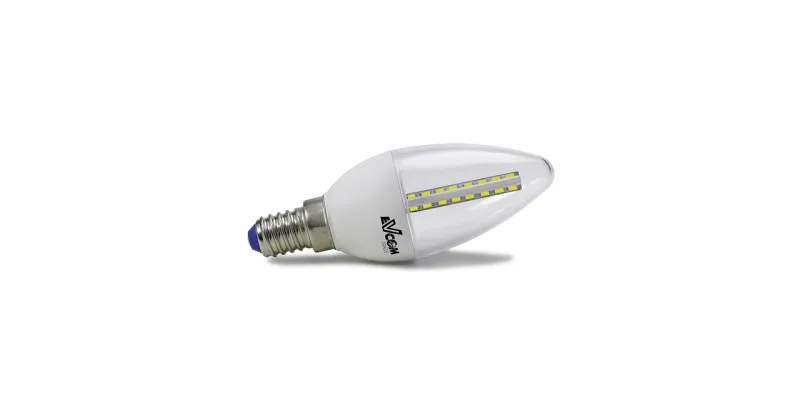
E14 is the small screw base used in candle globes and small lamps. LED E14 globes come in candle, small round and filament shapes; check the globe's length and diameter against the shade, especially in chandeliers.
Shapes
- A60: the classic globe shape.
- Candle and flame-tip: chandeliers and wall lights.
- Round (G45, G95, G125): the number is the diameter in mm.
- Tubular and filament shapes: decorative pendants.
- Reflector (PAR, R): directional light for spots and floodlights.
How to buy the right replacement
- Take the old globe to the shop or photograph its base and markings.
- Note the maximum wattage on the fitting.
- Choose brightness in lumens and colour temperature; see LED light bulbs.
- Check dimmability if the light is on a dimmer.
Questions
What are the most common light bulb bases in Australia?
B22 bayonet and E27 Edison screw for general lighting, plus GU10 and MR16 for spotlights.
What is the difference between GU10 and MR16?
GU10 runs on mains voltage and twists in; MR16 is a low-voltage, push-in base that needs a transformer.
What does E14 mean?
A small Edison screw base with a 14 mm diameter, common in candle globes and small lamps.