Outdoor Lighting Guide: Solar, Low Voltage or 240 V, and IP Ratings
The practical side of lighting a garden: how each power option works, which IP rating goes where, and what survives Australian sun and coastal air.
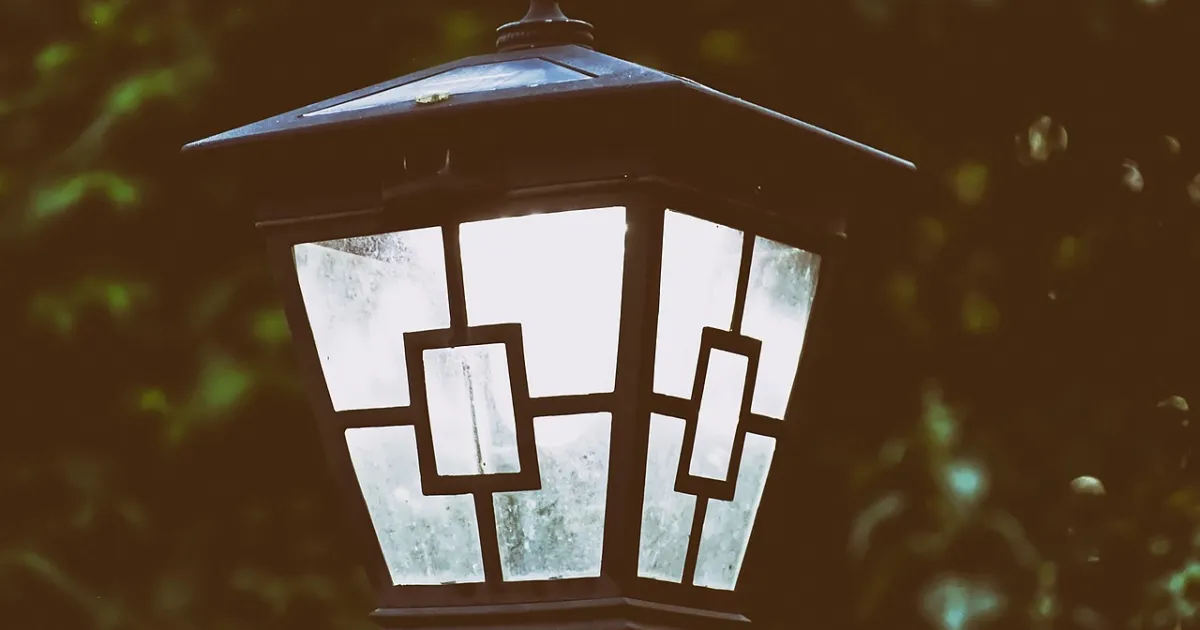
Most outdoor lighting disappointments come down to the same few causes: solar lights that fade by nine o'clock, low voltage lights that get dimmer towards the end of the run, or a fitting that fogs up after its first summer storm. This guide covers the practical side: power, IP ratings and materials that last in Australian conditions. For ideas on what to light, see our outdoor lighting ideas.
Three ways to power outdoor lights
| Solar | Low voltage (12 V or 24 V) | 240 V mains | |
|---|---|---|---|
| How it works | A small panel charges a battery by day; the light runs from the battery at night | A transformer or driver plugs into an outdoor power point and feeds a low voltage cable to the lights | Fittings wired directly into the home's circuits |
| Brightness | Low to modest; depends on sun and battery | Good, consistent | Highest |
| Best for | Path markers, festoons, spots where cabling is hard | Garden beds, trees, paths, steps | Wall lights, security lights, pendants under cover |
| Installation | DIY | Plug-in kits are made for DIY | Licensed electrician |
Low voltage garden lighting, explained
The Australian and New Zealand wiring rules (AS/NZS 3000) define extra-low voltage as not exceeding 50 V AC or 120 V ripple-free DC. Garden systems typically run at 12 V or 24 V, which is why plug-in kits can be laid out by a home owner: the only mains connection is the transformer plugged into a weatherproof outdoor power point.
- Size the transformer: add up the wattage of every fitting on it and choose a transformer rated above that total, with some spare capacity rather than running it at its limit. Check the manufacturer's guidance.
- Watch the cable runs: voltage drops along long, thin cables, so the last light in a long run can look noticeably dimmer than the first. Keep runs short, use the cable size the kit specifies, or split the garden into two or three shorter runs.
- Protect the cable: lay it where you will not dig, or run it in conduit, and leave a little slack at each fitting so it can be moved as plants grow.
Solar lights: what to expect
Solar lights are easy, but they are only as good as their panel's position. In Australia the north side of the house gets the most sun, so a light on a shaded southern fence may never fully charge, especially in winter. Look for models with a separate panel on a lead, so the light can sit in the shade while the panel sits in the sun, and for replaceable batteries, which usually wear out before the rest of the light. Solar suits marker lights and soft accents; for steps, entries and anything you rely on for safety, a wired option is more dependable.
LED outdoor lighting
Almost every outdoor fitting sold today uses LEDs, either built in (integrated) or as a replaceable globe. Integrated fittings are compact and well sealed, but when the LEDs fail the whole fitting is replaced. Fittings that take a globe, such as GU10 spikes or E27 lanterns, cost less to repair. Outdoors, a few soft pools of light read better than one bright floodlight. Brightness is measured in lumens; our guide to lumens explains how to compare.
Outdoor strip lighting
LED strip under a bench seat, a step nosing or a handrail gives a clean line of light with no visible source. Use a strip rated for the position (exposed spots need a sealed, silicone-covered strip), mount it in an aluminium channel with a diffuser so the individual LEDs do not show as dots, and keep the driver somewhere dry and ventilated.
IP ratings at a glance
The IP code has two digits: the first is protection against solid objects and dust, the second against water.
| Rating | What it means | Typical position |
|---|---|---|
| IP44 | Protected against objects over 1 mm and splashing water from any direction | Under eaves, verandahs and covered alfresco areas |
| IP65 | Dust-tight, protected against water jets | Exposed walls, garden spikes, bollards |
| IP67 | Dust-tight, protected against temporary immersion up to 1 m | In-ground uplights and places where water pools |
| IP68 | Continuous immersion, under conditions the manufacturer specifies | Ponds and water features, only if made for it |
Pool lighting is its own specialist category; leave it to the pool builder and electrician.
Materials for sun and salt air
- Coastal homes: marine-grade stainless steel, solid brass or copper, or good powder-coated aluminium. Cheap plated finishes pit and rust quickly near the sea.
- Strong sun: some plastics discolour and turn brittle under UV; look for UV-stabilised diffusers and glass lenses.
- Patina: raw brass and copper darken outdoors, which many people like. See brass lighting for how the finishes age.
Colour, glare and the neighbours
Warm white, around 2700–3000 K, flatters plants, timber and stone. Aim lights down or at a target, choose shielded fittings so the globe is not visible, and use timers or dusk-to-dawn sensors so lights are not on all night. Less spill keeps the night sky darker and is kinder to neighbours and nocturnal wildlife.
Who can install what
Solar lights and plug-in low voltage kits are designed for DIY. A new outdoor power point, any hard-wired 240 V fitting and any change to fixed wiring must be done by a licensed electrician.
Questions
Can I install low voltage garden lights myself?
Plug-in 12 V and 24 V kits are designed for DIY, provided the transformer plugs into a suitable weatherproof outdoor power point. Installing that power point, or any 240 V wiring, is a job for a licensed electrician.
What IP rating do garden lights need?
As a general guide, IP44 under cover, IP65 for exposed positions and IP67 for in-ground lights or spots where water collects. Always follow the rating the manufacturer gives for the position.
Is solar or low voltage outdoor lighting better?
Low voltage is brighter and more reliable; solar is quicker to set up and needs no cabling. Many gardens use low voltage for paths and features and solar for hard-to-reach spots.
Why are my last garden lights dimmer than the first?
Usually voltage drop along a long cable run. Shorten or split the run, or use the heavier cable the manufacturer recommends.